Growing proof that autonomous cars save lives (spectrum.ieee.org)
350 points by bookofjoe 17 hours ago
giantg2 12 hours ago
Better driver education and higher test standards would save lives too. So would banning alcohol. None of these solutions, including automated cars, will be mandated any time soon. It's not enough to have data, you also have to have societal buy-in.
Interesting that Waymo chooses to compare accident rates with the average driver vs the rideshare drivers their cars replace. The numbers wouldn't look as impressive because rideshare drivers are involved in fewer serious accidents than the average person.
Waymo says it has 170 million miles and I found 2 fatal accidents it was involved in (fault doesn't matter as fault is not included in the other stat either). Looks like the average is about 1.3 fatalities per 100 million miles, and about 1 per 100 million miles for CDLs. This doesn't seem that impressive.
If we want adoption, we would need it be placed in individual vehicles and it should look at removing driver liability. People will use it when they are drunk if it means not going to jail and it's readily available.
jonas21 5 hours ago
> Waymo says it has 170 million miles and I found 2 fatal accidents it was involved in (fault doesn't matter as fault is not included in the other stat either)
I suppose you can claim fault doesn't matter. But if you read the narratives of both fatal incidents, they are so clearly not the Waymo's fault that I don't see how you can hold it against them.
In the first [1], the Waymo was stopped at a red light when the car behind it was rear-ended by an SUV traveling at high speed. Both that car and the SUV then struck the Waymo. The SUV hit a total of 6 cars and someone in one of the other cars died. According to the police, the SUV may also have been involved in "multiple hit-and-run accidents reported just minutes before" [2].
In the second [3], the Waymo was yielding to a pedestrian when a motorcyclist made contact with the left rear corner of the Waymo. The motorcyclist fell to the ground to the left side of the Waymo, then another car tried to pass the Waymo and struck the motorcyclist, killing them. That other driver fled the scene.
If you drive on urban streets, no matter how good of a driver you are, there's a chance you're going to be involved in some sort of incident that's completely out of your control -- that seems to be what both of these are.
timster6442 4 hours ago
I agree that these cases are ridiculous to blame on the waymo entirely, but to give logic to their reasoning here you're unsure if on average the 1.3 fatalities per 100 million miles (FPMM) may also be on average ridiculously not the drivers fault as well. Perhaps if you were to throw out all ridiculous cases you'd have an average of CDL's having a 0.3 FPMM vs Waymo's having 0 FPMM.
The nuance you describe at the end is the better interpretation: fatalities per mile driven is a useless metric since it's such a rare occurance and incredibly circumstantial that it cannot be used as a meaningful comparison metric for safety.
21asdffdsa12 2 hours ago
belorn 2 hours ago
Simon_O_Rourke an hour ago
> The motorcyclist fell to the ground to the left side of the Waymo, then another car tried to pass the Waymo and struck the motorcyclist, killing them. That other driver fled the scene.
I wonder if they ever caught that guy?
fhub 25 minutes ago
Veserv 4 hours ago
The commonly cited fatality statistics do not discuss fault, so, absent more precise information, a apples to apples comparison should not conditionalize on fault.
Why? Well let us try to imagine a world where Waymo has the statistically average fatal crash rate, yet is never at fault. In this world, every fatal crash occurs at the Waymos. You just have a bunch of crazy drivers roving the streets causing fatal crashes against (or involving) unsuspecting, not-at-fault victim Waymos.
If that is the world, then are these crazy drivers only crashing into Waymos? Probably not, these crazy drivers would almost certainly be crashing into a statistically average distribution of unsuspecting, not-at-fault victims.
So this imagined world is consistent with the overwhelming majority of human drivers engaging in 0 fatal accidents at fault with a small, crazy roving subset being at fault for all fatal accidents. So, in that world, a Waymo that is only ask good as the statically average driver would actually be infinitely worse than the overwhelming majority of human drivers. If you only replaced the 10th percentile driver (90% of drivers are better), you would actually be increasing the fatality rate. Only by displacing that crazy subset would you actually be decreasing the fatality rate.
Are we in that world? The Waymo numbers on fatal accident involvement with no fault actually kind of point in that direction (though the mileage numbers are still too low to make a strong conclusion). Seemingly massive crash and injury reduction due to massive reduction of at-fault crashes, but the fatality reduction does not seem proportional. Another possibility is that the Waymo driving distribution is biased toward being in situation that result in more no-fault fatal crashes.
But, that is all just conjecture and thought experiments. Unless we have better data, we unfortunately should be restricting ourselves to apples to apples comparisons which, in this case, do not conditionalize on fault.
Though, to nitpick on the original post, I think that the 2 fatal crashes in 170 million miles (~85 million miles per fatal crash which is similar to the USA human average of ~83 million miles per fatality), is probably not the correct analysis. The average fatal crash is probably 2 vehicles and 1 fatality. So, the 85 million miles per fatal crash versus 83 million miles per fatality is probably fine in the crash vs fatality direction. But I am pretty certain you would actually need to double the 170 million to account for the "statistically average mileage of the other cars".
Otherwise, if we have exactly two cars in the world each with 100 million miles and they engage in one fatal crash with one fatality, then we would conclude that car 1 has 1 fatality per 100 million miles and car 2 also has 1 fatality per 100 million miles. Naively averaging them, we could conclude that the overall fatality rate is 1 per 100 million miles. Therefore, over the 200 million miles the two of them drove, there were 2 fatalitys. Obviously incorrect, so we almost certainly need to weight them by their relative proportion when aggregating them.
ArnoVW 5 hours ago
That second accident looks like it could be one on those typical cases of SDC causing accidents by behaving unexpectedly (like braking for a pedestrian where human drivers would have denied right of way)
I havent read the doc and I am not arguing either way, just saying that you can cause an accident in other ways than by ploughing into someone.
Mawr 4 hours ago
johnfn 11 hours ago
As a biker, I've had human drivers intentionally try to drive me off the road or hit me. Neither driver education nor higher test standards will solve that problem.
estebank 8 hours ago
Earlier today saw a guy on a pick up truck griefing an empty Waymo by brake checking and boxing it, all over the road for about 10 minutes and over 5 blocks (no idea how much earlier it started), causing every other driver to freak out or be confused about what was going on.
All the while all I could think was "you're spending your time making it more likely for a collision to happen, all to 'anger' a toaster with 360° camera coverage".
pfdietz 4 hours ago
cineticdaffodil 5 hours ago
Gareth321 4 hours ago
I've been following Tesla communities and a common response to using FSD is that it makes people nicer drivers. Thousands of people admitting that they can be angry drivers. That they get frustrated in traffic and can take risks or be aggressive on the road. With FSD they almost universally claim to be calmer, care less about being cut off, and almost never experience road rage.
ifwinterco 2 hours ago
hliyan 3 hours ago
Inclined to agree. I think what we call "car brain" is just one manifestation of hardwired circuits in our brain that detect any (even temporary) power differential and leverages it for maximum survival advantage. There is no way to put nearly 200 horse power at the disposal of one man, without triggering at least some part of those circuits.
giantg2 9 hours ago
I imagine these same people are the type of people who would throw something out the window of an AV too.
harha 9 hours ago
alexgoodhart 6 hours ago
tosapple 8 hours ago
this happened to me twice as a child, once on a main road with a shoulder and another time on a side street with no shoulder.
lynx97 6 hours ago
As a blind pedestrian, 95% of the pain I have to endure while out and about is due to lazily parked bikes. IOW, bikes can even hurt people if they are NOT moving and their owner isn't even around.
rglullis 4 hours ago
amazingamazing 10 hours ago
Why do you say that?
loeg 9 hours ago
My_Name 6 hours ago
hamdingers 11 hours ago
> rideshare drivers are involved in fewer serious accidents than the average person.
Do you have evidence of this? It's certainly true for some kinds of professional drivers (i.e. truck and bus drivers) but I can't find any kind of crashes/100m mile numbers for rideshare drivers.
Anecdotally as both a rider and road user I find rideshare drivers to be some of the worst. Aggressive, distracted, impatient, and overconfident. I would be very surprised to find out they are above average drivers.
tempestn 11 hours ago
Per mile driven I expect it's true, just given their greater experience than most drivers. Not that I disagree with you that many Uber drivers are not actually great at driving, but neither is the average driver in North America. I expect we just notice rideshare drivers' mistakes more, and get exposed to them at a greater rate.
dzhiurgis 10 hours ago
rpdillon 9 hours ago
Ride share companies use all kinds of techniques to off-board drivers that they deem unsafe. This can be as simple as tracking the driving record and accidents, but they also use the accelerometer in the driver app to assess the location of the car and what G-forces are being placed on it to figure out and predict high-risk (expensive) insurance.
I don't know how aggressive this filtering is, but it is a way to save money on the insurance costs associated with the gap insurance in rideshare. This filter alone would probably put rideshare drivers above average, but that's speculation on my part.
socalgal2 10 hours ago
In my circle, everyone who's tried Waymo never wants to use Uber/Lyft with a human driver again. And, many of them wish they could own one or at least use one for much longer drives (100s of miles).
I would visit my mom (2hrs by car) more often if that 2hrs (each way) wasn't so stressful and exhausting and I could just be chauffeured by a self driving car while I browse the net, play a game, watch a movie, or talk to friends.
robner 9 hours ago
In the Netherlands were I live we use trains for this
uv-depression 9 hours ago
int0x29 7 hours ago
SEJeff 9 hours ago
TulliusCicero 3 hours ago
himinlomax 2 hours ago
SEJeff 9 hours ago
Buddy buy a Tesla, as that’s definitely gonna happen in the medium term.
rkuykendall-com 8 hours ago
ted_dunning 9 hours ago
dkdbejwi383 2 hours ago
Enforcement, too, including the little things that "don't really matter". Letting people get away with minor infringements like parking where it's forbidden, idling with the engine running, close passes etc means the window of what's acceptable driving behaviour shifts.
We should return to the idea that driving is a privilege, not a right.
eklitzke 11 hours ago
AFAIK there isn't data about fatality rate for rideshare services (I'm sure Uber has this data but I don't think they make it public). Without this data I wouldn't automatically jump to the conclusion that rideshare services are safer than the average driver, anecdotally at least I don't see any reason to assume this.
It's also extremely important to normalize this data per geo and driving type (urban vs freeway miles), which Waymo does do and you seem to ignore.
fn-mote 10 hours ago
> It's also extremely important to normalize this data per geo and driving type (urban vs freeway miles)
Getting to be well beyond the range of “armchair HN statistician”.
Sounds like something the government should do as part of public policy deliberations.
In my dreams.
Simon_O_Rourke an hour ago
> So would banning alcohol.
As in a full on country wide prohibition? Whatever amount of road deaths that would prevent would be offset by idiots dying via drinking industrial spirits.
phoghed 11 hours ago
> It's not enough to have data, you also have to have societal buy-in.
You already have it, people want this.
> Waymo says it has 170 million miles and I found 2 fatal accidents it was involved in (fault doesn't matter as fault is not included in the other stat either). Looks like the average is about 1.3 fatalities per 100 million miles, and about 1 per 100 million miles for CDLs. This doesn't seem that impressive.
And what do those numbers look up as the saturation of self driving cars increases?
speedstyle 9 hours ago
> people want this.
Could you justify this? e.g. https://doi.org/10.1080/17450101.2024.2325386 (N=1890):
"What first comes to mind when you hear the term self-driving vehicles?" (coded free-text) 17% positive, 34% neutral, 49% negative
"How would you feel about riding in a self-driving vehicle instead of the existing ways you travel?" 28% comfortable, 15% neutral, 53% uncomfortable
"How would you feel about using the roads alongside self-driving vehicles?" 29% comfortable, 20% neutral, 49% uncomfortable
phoghed 5 minutes ago
amanaplanacanal 7 hours ago
fn-mote 10 hours ago
> And what do those numbers look up as the saturation of self driving cars increases?
Keep in mind the lesson of seat belts. Which is that the highest-risk drivers are also the least likely to wear a seatbelt.
Selective recruitment is a danger in this armchair analysis, too. I don’t think 18 year olds aren’t giving up the thrill of tearing down side streets at 60mph to use a self-driving car - they probably can’t even afford one. To be honest, I am just guessing at the profile of the biggest offenders but insurance rates seem to back me up.
bshaughn 12 hours ago
A horrifying number of people flagrantly use their phones while driving. Im not talking about peaking at a text or google maps, but straight up scrolling tik tok while driving. At the end of the day there is going to be a lowest common denominator of selfish morons on the road, and the two practical solutions I see are 1) aggressive surveillance state grade distracted driving enforcement 2) self driving cars.
I used to bike to work in Chicago and it was surreal being able to look right into someone's car and see hardly anyone is paying attention.
I'll also never forget the first time getting hit by a car (car did left turn when I was biking straight through a green light) and right before impact seeing the driver's face illuminated by their phone while looking straight down driving into me.
giantg2 12 hours ago
It doesn't have to be a surveillance state for enforcement. Just preventing repeat offenders would practically remove that lowest denominator. For example, I knew a guy in high school who totaled 4 cars and had other minor accidents in 2 years. There's no reason for that person to be allowed to operate a vehicle. On the prevention side, we could require more training.
If you tried to enforce self driving cars, you'd still need some level of surveillance too.
kay_o 11 hours ago
andai 11 hours ago
socalgal2 9 hours ago
strbean 11 hours ago
I play the "who is staring at their phone" game as passenger sometimes. From my sampling, the number is pretty damn close to 100%.
jodrellblank 11 hours ago
National Safety Council says passenger vehicles are 0.46 per 100M miles, trains are 0.01 and busses 0.009.
https://injuryfacts.nsc.org/home-and-community/safety-topics...
dddddaviddddd 3 hours ago
The best way to reduce driving fatalities is probably to reduce the amount of driving that people do. Excellent public transit, denser cities, better pedestrian / bike infrastructure, mixed-use zoning, etc.
zimpenfish 3 hours ago
voxelghost 8 hours ago
Per highway mile, now, I am not sure if overall is better or worse. But it seems to be a discrepancy to Waymo measurement.
Also not sure if Waymo data includes pedestrian deaths? (NSC seems not to)
Brystephor 5 hours ago
Sorry, why would the baseline be their rideshare drivers instead of the average population? That seems like an arbitrary segment given that when talking about safety baselines, the average driver is what someone would reference. And why would waymo want to publish their own ride share driver safety data, especially if it is presumably not supporting their point, and what would anyone gain from them doing that? If they did do that, the counter argument would quickly be "they published ride share driver data because they know it makes them look better, why not compare to the average driver?" (Its equivalent because we do not have stats on waymo drivers vs the average driver and both statements are built off assumptions)
timster6442 4 hours ago
I believe their argument is weak but, I think it is a fair assumption that the average ride share driver is safer than the average driver. That is to say the average driver is unsafe due to the fact the average driver is the set of all people which includes the set of drunk drivers whereas we can generally assume that set of rideshare drivers don't, especially while on the clock.
dgellow an hour ago
But there is lots of money to be made by requiring FSD. No money to be made by banning alcohol. We know what the current administration cares about
parl_match 9 hours ago
> Waymo says it has 170 million miles and I found 2 fatal accidents it was involved in (fault doesn't matter as fault is not included in the other stat either)
fault absolutely matters. and with two fatal accidents, it should be trivial to find out if waymo is at fault.
it is bad faith, otherwise.
AlotOfReading 8 hours ago
You could have looked up the collisions instead of making vague accusations of bad faith. In one, a Tesla going 98MPH collided with a line of vehicles (including a Waymo) stopped at a light. In the other, a motorcyclist hit a Waymo from behind and fell off their bike, where they were struck and killed by another vehicle (that fled).
parl_match 7 hours ago
giantg2 9 hours ago
Fault matters in general, but it's not captured in the stats so you can't make an accurate comparison.
parl_match 7 hours ago
namesbc 11 hours ago
Good point. Waymo is not comparing apples to apples here
"At-fault" Waymo crashes on 35mph city roads driven only in good weather vs. all crashes regardless of fault for on all roads including highways driven in all weather conditions
tonygrue 9 hours ago
(Ex-Waymo) Waymo tries really hard to compare apples to apple miles, considering a number of dimensions (weather, speed limits of the roads the miles are on, the specific cities, and more). This is one of the things that they feel distinguishes them in the space.
The data on https://waymo.com/safety/ reflects these apples to apples comparison.
They’ve also, when possible, done comparisons of the Waymo driver to an ideally attentive human driver. https://waymo.com/blog/2022/09/benchmarking-av-safety/
The biggest challenge is in sourcing the data. A lot of these datasets don't exist or have to be developed.
(The article itself, mixes and matches stats which is a common thing in general media).
jryle70 10 hours ago
Do human drivers in the same "good weather" cities have fewer accidents than human in other places?
wahern 5 hours ago
Not sure if you meant to imply it, but you don't need to remove driver liability to incentivize the inebriated to use autonomous mode. That's a calculation even someone who's blackout drunk can easily make.
Removing liability might incentivize more people to, e.g., drive their car to a bar. I'm not sure that's a good thing. Maybe great for bars and restaurants, or possibly quality of life, but removing liability probably has other unintended consequences.
It's maybe too early tell whether criminal liability should be changed, or at least how it should be changed. If criminal liability had been removed when Tesla started making their extravagant self-driving claims, surely you'd agree it would have been too soon, and potentially resulted in more accidents. Few if any consumer autonomous driving modes are as reliable as Waymo
Absent statutory changes, common law tort will probably evolve in some states to take into consideration new incentives and norms, and that might help point the way for changes in criminal law. Those policy changes are typically driven by courts wrestling with real world cases, whereas de novo legislative changes are often driven by imaginations and lobbying.
ArnoVW 4 hours ago
Criminal liability aside, if I am in a wheelchair all my life, requiring expensive medical care, someone will need to pay for that. So civil liability will need to be sonewhere.
wahern 3 hours ago
pbkompasz 4 hours ago
And those CDL drivers go at speed limit because they have to cover as much distance as possible, meanwhile Waymo and similar driverless tech frequently go 10km/h below speed limit. I believe there would be much less incidents by humans if they too were to drive at those speeds.
mbac32768 12 hours ago
These are great points. I would add that part of societal buy-in might involve driving the cost of hiring cars down by automating them, though I realize at the moment Waymo can charge a premium because people prefer to not have a human driver. Over the long term autocars should be cheaper than either Uber or owning a car yourself.
giantg2 12 hours ago
I was talking more about mandating or encouraging the tech in personal vehicles. I think there's plenty of buy-in for driverless taxis already. It's a perception thing - trust a stranger or trust an automated system. I think it's a much tougher sell to put it in person vehicles, especially due to cost.
TulliusCicero 3 hours ago
> Better driver education and higher test standards would save lives too. So would banning alcohol.
The biggest thing would be safer road/street design, but Americans are kind of allergic to that. Talk about traffic calming or road diets and a lot of folks get absolutely furious.
sofixa 3 hours ago
And an even bigger thing would be providing viable alternatives to driving, which would reduce the amount of cars on the roads, and help with those driving unsafely (because they're tired, not good drivers, "had a couple of drinks", etc).
TulliusCicero 3 hours ago
JumpCrisscross 11 hours ago
> Better driver education and higher test standards would save lives too. So would banning alcohol. None of these solutions, including automated cars, will be mandated any time soon. It's not enough to have data
You can't subsidise "better driver education" (to a meaningful sense, to my knowledge) or "banning alcohol." You literally can't do the latter. We tried, and I'll torch a supporter's house for fun with some high-proof something or other for fun if someone tries it again in 2026.
You can use direct poicy action to save lives through AVs.
So at the end of the day, we're deflecting from harm reduction to preserve a parochial mode of transport or not.
tredre3 11 hours ago
I took banning alcohol to mean lowering driving BAC to 0%, not banning alcohol society-wide.
It would be a lot easier for drivers to have the following thought process: "I drank tonight, I can't drive home" rather than "I drank two beers over the period of 3 hours, am I good? Yeah, probably, let's gooo."
> I'll torch a supporter's house for fun with some high-proof something or other for fun if someone tries it again in 2026.
If you react that strongly and violently to the idea of alcohol being banned, you might want to look into your relationship with alcohol.
amanaplanacanal 7 hours ago
IslandRebel 2 hours ago
Drink driving has stiff penalties in the UK. It is also socially unacceptable to drink and drive. The UK also has increased requirements on drivers, and the number of road deaths is far lower per capita than it was in the 60s when there were fewer people driving. There are numerous other measures, which are too numerous to list here.
My understanding is that in US states a DUI (Wisconsin) is nothing but a fine, and drinking while driving isn't taken seriously at all.
jasondigitized 9 hours ago
Insurance underwriters may make societal buy-in easier when rates are vastly different but that may take quite a while to hit critical mass so both drivers are self driven
yshklarov 9 hours ago
That observed fatality rate, 2, is too low to give a precise estimate of the mean. If we assume fatalities follow a Poisson process, then it's plausible (at 5% significance level) that the true expectation is only 0.36 deaths, not 2.
So it's more useful to look at serious injury statistics as a proxy. For those, Waymo says that there is a significant reduction.
derac 6 hours ago
The CDL comparison seems misleading. Those are very large and safe vehicles that are mostly on the highway. Being close to that number is impressive to me.
buu700 4 hours ago
> Better driver education and higher test standards would save lives too. So would banning alcohol. None of these solutions, including automated cars, will be mandated any time soon. It's not enough to have data, you also have to have societal buy-in.
Superman: I want to get rid of guns.
Mr. Terrific: For use around the world 24×7, you’d need to replicate the T-Spheres on a massive scale. Still, you could never get rid of all the guns.
Superman: But most. You know we could.
Mr. Terrific: Just because we can doesn’t mean we should. People would resent us.
Superman: And they’d be alive to do that. Check.
Mr. Terrific: Some would fight.
Superman: Let them come then, with sticks. Think of the lives we’d save. Check.
Mr. Terrific: Smoking.
Superman: What?
Mr. Terrific: Cigarettes kill far more. People keep smoking even though they know it’s killing them. Their families can only watch them die.
Superman: And?
Mr. Terrific: You want to save lives? Jail every smoker. Check. And imprison anyone who speeds. Traffic fatalities are huge. Check. Lock up everyone who leaves a dangerous dog unchained. Check. Finally, we kill anyone who doesn’t recycle. Checkmate.
Superman: You’re not going to help me, are you?
Mr. Terrific: No, sir, I am not.
alightsoul 9 hours ago
Banning drugs like alcohol imo is not a solution for any drug, people have their own reasons to consume them and the underlying cause should be resolved first
andai 11 hours ago
Does n=2 give any statistical significance? Or does that come from the miles?
redox99 11 hours ago
With the miles you can establish a confidence interval of the true fatality rate.
senordevnyc 10 hours ago
Aside from the fact that I don’t see how you can calculate a rate off two data points (without really wide error bars), I also don’t understand how fault doesn’t matter. If neither of these were Waymo’s fault, then Waymo has never caused a fatal accident, whereas we can assume that nearly all of the fatal accidents that make up the rate you’re comparing it with were caused by a human, right? Well, at least the ones that were someone’s fault as opposed to random chance or something.
ted_dunning 9 hours ago
The form of the data pretty much forces this kind of analysis because fault is not reliably recorded (or even known, to be fair).
dudiejdj484 6 hours ago
Worse human driving improves the number of lives autonomous driving saves
eighty8days 8 hours ago
So would reducing car dependency altogether...
1970-01-01 12 hours ago
>you also have to have societal buy-in.
Isn't this, as all deadly decisions are, driven (pun intended) by your death rates? As more non-believers of autonomous cars are killed, the momentum of societal buy-in accelerates.
giantg2 12 hours ago
If fatality rates were higher, then maybe. But at 1.3 per 100 million miles, it seems like that would have low effect.
spiderice 8 hours ago
Waymo is better than it was last year. And next year it will be better than it is now. And every year after that it will continue to improve. Meanwhile, a thousand years from now humans will still be humans.
I don't know why you come across as so antagonistic to self driving cars. But even if they're only as good as humans today, then you have completely and flat out lost the argument already.
lynx97 5 hours ago
Don't forget the elderly. They are responsible for a crash in roughly $age% of the cases. So a 66 yo person is the reason for a crash in 2/3 of the cases... I hear Greece has a mandatory doctor visit after 65 of so every 2 years. Since that is hard to politically get through in other countries apparently, AVs might save some lives here if made mandatory of the elderly.
IslandRebel 2 hours ago
They make pensioners retake their driving tests here (UK) after a certain age and do basic health checks.
lotsofpulp 8 hours ago
>It's not enough to have data, you also have to have societal buy-in.
The lower auto liability and umbrella insurance premiums alone would drive buy-in.
It’s literally the riskiest thing people do with the costliest consequences.
la64710 9 hours ago
If the most advanced ie FSD by Tesla still does not come with gurantee and the human has to babysit it ie stay alert at all time so they can take over in a moments notice or less , then shouldn’t the positive results be also attributable to the humans that drive those autonomous vehicles?
alterom 6 hours ago
>Interesting that Waymo chooses to compare accident rates with the average driver vs the rideshare drivers their cars replace
"Interesting" is doing so much heavy lifting here.
Fully agreeing with your other points as well.
bsder 10 hours ago
> The numbers wouldn't look as impressive because rideshare drivers are involved in fewer serious accidents than the average person.
Citation definitely needed.
The last couple of human rideshare drivers I have had were AWFUL. One was so awful that I gave them a one star with "Actively dangerous remove from road, please." I never give one star reviews.
khazhoux 9 hours ago
> Interesting that Waymo chooses to compare accident rates with the average driver vs the rideshare drivers their cars replace. The numbers wouldn't look as impressive because rideshare drivers are involved in fewer serious accidents than the average person... Looks like the average is about 1.3 fatalities per 100 million miles, and about 1 per 100 million miles for CDLs. This doesn't seem that impressive.
LOL, we have a machine that can now drive much more safely than average humans, and comparable to professional drivers. Yeah, this is not impressive at all. C'mon people, wake me up when we actually make some real technological progress, will ya?
mostly_harmless 14 hours ago
Fatality data is extremely skewed. 44% of drivers aren't using a seatbelt, 29% are speeding related, I recall alcohol involvement being about 30%, though it's not listed in the link I checked. About 20% of automobile fatalities aren't in cars but are pedestrians or bicyclists struck by cars (add another 16% if you want to include motorcyclists, though only half of which involve another vehicle). I recall the percentage of vulnerable road user deaths is much higher in urban areas.
(https://www.iihs.org/research-areas/fatality-statistics/deta...)
The majority of drivers are good, but some drivers are really bad. Life in USA is extremely car-centric and taking away a license is often infeasible and the offender usually drives without their license anyways. If anything, I'd like autonomous cars to give a legal out to remove bad drivers. You get a DUI, or commonly speeding? You may only take an autocar.
BugsJustFindMe 14 hours ago
> "The majority of drivers are good, but some drivers are really bad."
I take issue with this. The majority of drivers are "mostly fine as long as circumstances are favorable", not "good". People for the most part do not even know about the concept of defensive driving let alone practice it. Even the best people are fundamentally complacent in basically everything they do. They zone out sometimes, they get too close, they don't always look where they're going. They don't get into more collisions because the world doesn't throw more obstacles at them, not because they're good at driving.
seizethecheese 14 hours ago
I disagreed with you and went looking in the article for evidence (yeah bad, epistemologically). I actually found evidence for your point. The largest cause of fatal crashes is Generally distracted or "lost in thought" (daydreaming) at 64%. That happens to most people,.
missinglugnut 12 hours ago
Gigachad 12 hours ago
tialaramex 12 hours ago
jcranmer 12 hours ago
As a point of evidence in favor of this viewpoint:
Multi-dozen car pileups aren't particularly rare, with the common cause for a lot of these being "one car hits an icy patch, hits another car, car behind them tries but fails to stop in time due to the ice, rinse and repeat a few dozen times". And the root cause of that is every single driver in that collision driving too fast for conditions and unable to make the requisite emergency stop in time.
Retric 14 hours ago
Good here is in reference to the average crash statistics.
Most drivers are safer than the average, because you can’t go below 0 and some people are really bad.
ryandrake 14 hours ago
BugsJustFindMe 13 hours ago
saalweachter 13 hours ago
derac 6 hours ago
A huge percentage of the cars I see on the highway are tailgating. People are awful drivers.
Veserv 12 hours ago
The fatality rate is 1.19 per 100 million vehicle miles [1], ~83 million miles per fatality. The mean driver averages ~15,000 miles per year. So, the mean driver encounters a fatal crash after ~5,500 years of driving. If you started driving when the Great Pyramid was built, you would still have another 1,000 years before you would expect to die in a fatal crash.
The mean driver in the context of the USA driving environment is shockingly safe. Being safer than even the mean human driver in the USA is hard and takes a shocking amount of data to verify. Anybody downplaying it as "lol humans are so unsafe" to argue the problem feels easy to solve or can be solved by the end of the year with a little bit of elbow grease is utterly clueless.
[1] https://crashstats.nhtsa.dot.gov/Api/Public/ViewPublication/...
davidgay 11 hours ago
BugsJustFindMe 11 hours ago
bad_haircut72 14 hours ago
The people OP is talking about, the 0.05% absolute worst drovers, are not merely complacent, they're doing things like getting hammered and going street racing (shamefully I can say, I was 19 once...) or speeding away from crimes etc
edit: someone else replied with data contrary to this, maybe they are right but Im leaving this here to represent the counterargument
BugsJustFindMe 13 hours ago
ummonk 13 hours ago
Guvante 4 hours ago
I mean when comparing to machines though the only thing the machines are better at is maybe not getting distracted while humans tend to be better at adapting which is usually important for safety to put it mildly
After all the first Tesla auto drive fatality was literally "that is probably a sign not a trunk"...
jojobas 4 hours ago
This is not supported by crash data. In Australia alcohol is involved in some 30% of fatal crashes. A lot of crashes are caused by a very small number of hoon drivers, distracted drivers etc.
Autonomous cars beating the average that includes the above are still worse than a diligent driver, which anyone can resolve to be.
binary0010 14 hours ago
Yeah, there's a woman who is quite old and has a severe disability who drives regularly through our neighborhood who's car every few weeks has a new giant dent, missing fender, broken windshield, etc.
It's sad we don't have a better way for people in these situations to do what they need without driving. It will be incredible to have autonomous driving just for older and or disabled drivers like this.
sensanaty 12 hours ago
You could always invest in actual public transport & sane infrastructure, rather than relying on clogging the streets up with more cars, autonomous or otherwise? My mother-in-law is in a wheelchair and zooms by on the bike paths faster than I do thanks to her handbike (it's seriously insane how fast people can move with handbikes), and if she needs to travel large distances she hops onto a train instead.
The best part of proper infrastructure and public transport is that it makes life for the drivers easier, too!
PorciiVorbesc 12 hours ago
redox99 11 hours ago
Robotbeat 14 hours ago
I believe Tesla’s FSD is already better than such unassisted drivers. Particularly with the current FSD limitations which require monitoring driver attentiveness. If every drunk who attempted to drive was using FSD, deaths due to drunk driving would be virtually eliminated. Heck, even advanced lane keeping and smart cruise control from other manufacturers, while much more crude, would still help tremendously.
dzhiurgis 10 hours ago
TulliusCicero 3 hours ago
> Fatality data is extremely skewed. 44% of drivers aren't using a seatbelt, 29% are speeding related, I recall alcohol involvement being about 30%, though it's not listed in the link I checked.
How is that 'skewed'? It sounds like you're just listing dangerous things, and yeah of course dangerous things are associated with fatalities, duh.
It's like saying that accidental gun deaths are 'skewed' because they're associated with keeping your gun loaded and not locking it up in a safe.
ricardobeat 12 hours ago
Does that skew really matter? Nearly all of those conditions are avoided by autonomous vehicles.
alexgoodhart 6 hours ago
Using public safety as a cudgel to mandate adherence to any technology is a nonstarter.
The imposition is huge. We’re talking about privacy, movement and its relationships with housing/work/family management/safety.
At the very least, it needs to be plainly stated that this concept is not being studied out of curiosity. A few companies have a gigantic investment in seeing massive, government-facilitated adoption that creates guaranteed customers and gated entry.
simianwords 3 hours ago
kyleblarson 12 hours ago
My tesla has yet to ask for a road beer while in FSD.
blitzar 3 hours ago
Can of coke and a ciggy, fsd'll be right as rain.
giancarlostoro 14 hours ago
> Life in USA is extremely car-centric
Mostly yes, but some states like NYC its more common to take trains, taxi cabs / Uber / Lyft, etc.
driverdan 13 hours ago
As much as people who live in NYC like to believe they're a state they're not, they're a city. Most of the state of New York does not have good public transit.
bluGill 12 hours ago
JoeAltmaier 13 hours ago
giancarlostoro 9 hours ago
GrinningFool 13 hours ago
It says a lot that 3 of the 4 options you gave involve cars.
giancarlostoro 9 hours ago
scotty79 13 hours ago
> The majority of drivers are good
Well, 80% of us believes ourselves to be above average, so there's that.
cbondurant 14 hours ago
I'd much rather all of the resources that are going into autonomous cars was instead going into proper public transit infrastructure. Cars are so hopelessly space and energy inefficient, and I hate driving them. If I could get around by bus, light rail, bike, and all of the wasted city space devoted to parking could be turned into more housing and amenities, that would be great.
I think it would be meaningful to also compare the fatality rates of the time tested and proven forms of public transit to these self driving cars too.
TulliusCicero 6 hours ago
People always say this, but
a) even countries known for good transit like Japan still have a ton of cars for various things, and
b) there's no getting around that the money going into self-driving cars vs public transit isn't something that can really be swapped. It's coming from a different place for a different reason.
We absolutely could invest into more trains even with the SDC money flowing anyway, it's not like the SDC money is blocking it. We collectively choose not to do this, and it's not Waymo's fault.
tossandthrow 2 hours ago
A better idea would just be to let drivers pay the real price for the infrastructure they occupy and their negative externalities.
Then people would likely not have a issue with public transit.
ElijahLynn 13 hours ago
Public transit doesn't really go that far, when you talk about the last mile it's pretty limited.
But I do like what you're going with that and maybe we could have public autonomous car infrastructure that we all share. And just one large global team working on awesome autonomous vehicles. That could be little pod type vehicles for one person and bigger ones as needed. Cuz the road system is pretty broad and amazing right now.
embedding-shape 13 hours ago
> the last mile it's pretty limited.
Where is that last mile exactly? In many metropolitan areas, you typically have available a broad selection of trains, subways, trams and/or buses of different sizes that takes you last mile. Some places even have special buses, like the "Neighbourhood Bus" we have here (https://www.barcelona.cat/mobilitat/sites/default/files/bcn-...) for narrow and steep neighborhoods up on mountains.
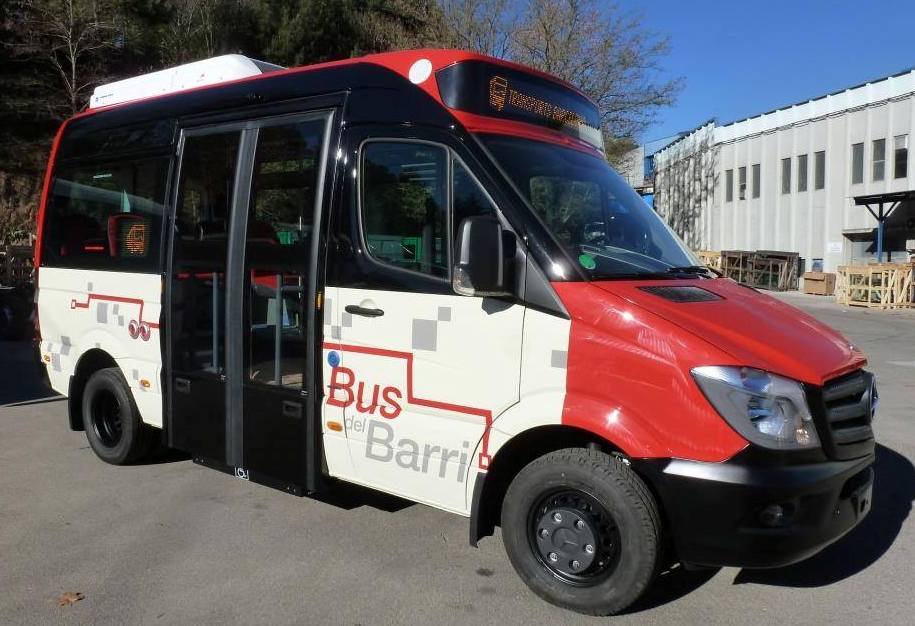
It's certainly doable, if you wanted to have last mile public transport.
madamelic 10 hours ago
bretthoerner 10 hours ago
ButlerianJihad 7 hours ago
iwontberude 12 hours ago
jokteur an hour ago
I live in Switzerland. Public transit goes _everywhere_, even remote villages and mountains. This is by design, such that one can only use public transit to go almost everywhere in the country.
Is public transit always more convenient than the individual car ? No, but you can make the conscious choice of not owning a car, even if you need to raise a family. Switzerland has a high rate of car ownership, because we have a lot of money to spend. But many people, even if they own a car, will sometimes use public transit, because it is convenient, safe and comfortable.
There are places in Switzerland where if you need to take a taxi or an Uber, you will have to wait more than 30 minutes before one gets there. At this point, it is more convenient to take the regional bus that goes every 30 minutes. Even if the public transit frequency is every hour, I can plan my journey to arrive on the correct time (also, public transit is synchronised in the whole country to avoid waiting times).
I can see autonomous rideshares displacing taxi service and such. I think automonous rideshares still need density to be profitable. So if you need to subsidise rideshare to cover the whole country, why not properly invest in public transit?
amelius 12 hours ago
> when you talk about the last mile it's pretty limited.
That's like a 15 minute walk. And with sufficient infrastructure investments this can be 5 minutes.
infecto 9 hours ago
Clamchop 13 hours ago
This is where I've always assumed things were going. People talk about one day owning a self-driving car but I look forward to the promise of not owning a car, never needing to buy, maintain, register, insure, or drive one. Not having to buy into a depreciating compromise, do I prioritize economy or seating or cargo or...? Gas, hybrid, electric? Not having to hunt or pay for parking.
Private cars are costly and spend most of their time just taking up space.
We'll see if it ever works out that way but a boy can dream.
nonethewiser 7 hours ago
marssaxman 13 hours ago
Rental scooters/bikes cover last mile service very well in my experience. I use transit a great deal more than I would if I had to walk so much on either end of the trip.
edgarvaldes 13 hours ago
vrosas 13 hours ago
EA-3167 13 hours ago
bakies 9 hours ago
I can walk a mile. Rarely have to in the city.
SrslyJosh 13 hours ago
I think you need to re-read the parent comment, specifically this part:
> I'd much rather all of the resources that are going into autonomous cars was instead going into proper public transit infrastructure.
You're almost certainly an American, and you probably have no idea what public transit is like in countries that have been investing in it for decades instead of focusing 95% of their resources on infrastructure for cars.
kstenerud an hour ago
The problem with transit systems is that they aren't designed for competition. They're costly to make, have few builder companies to choose from (who all know the game very well and go over budget as a tactic), and extremely difficult to overhaul/retrofit when more efficient tech becomes available.
They're great for short distance travel in densely populated areas, but outside of that I doubt they'd hold up in long-term cost and efficiency vs autonomous electric cars for long.
As for parking, a fully autonomous car service would allow a car to come to you and pick you up. So it wouldn't need to park near where you are.
WD-42 12 hours ago
Autonomous cars are pretty space and energy efficient if they act as public transportation. Cars spend something like 95% of their life parked. If AVs replace personal ownership, that's a HUGE reduction in the number of cars in existence. The future looks like a lot less parking lots and 8 lane suburban stroads.
koyote 10 hours ago
So at 2am you would have thousands of cars driving around empty?
Or would you still need a giant spot of land to park these things outside of peak hour?
tgsovlerkhgsel 3 hours ago
dzhiurgis 10 hours ago
Roads designed for buses (and trucks) also cost many orders of magnitude more than ones build for cars only.
If you account for that, cost per passenger mile on fully loaded electric bus is more than uber chauffeur.
arjie 12 hours ago
It does. About the same amount of money was spent in funding for Waymo as funding SFMTA over the period Waymo has existed. So in SF we are putting in as much money on public transit as Alphabet et al. is on Waymo and we both have the results we have.
nonethewiser 7 hours ago
>If I could get around by bus, light rail, bike, and all of the wasted city space devoted to parking could be turned into more housing and amenities, that would be great.
I guess it depends on where we're talking about. The majority of the US is not inside a city. So just diverting all resources into public transportation is only serving the metros.
If we're talking about a small country then sure.
Tinned_Tuna 6 hours ago
> The majority of the US is not inside a city.
I think this isn't true for the US any more, maybe it hasn't been true for decades?
WorldBank seems to have the ubranisation rate at around 80% for the US: https://data.worldbank.org/indicator/SP.URB.TOTL.IN.ZS?locat...
There is a bit of a definitional problem, with people living in suburbs identifying as rural, as do folks in exurbs. I don't think they're considered rural, and they're concentrated enough that well-designed public transit could serve them quite well. A decent public transit system means that families in sub/exurbs can go from 2 cars to 1 car without a major drop in quality of life, but they'd save $5k - $10k per year.
dfabulich 6 hours ago
Small self-driving busses would do exactly what you want. The cost of increasing bus service is overwhelmingly the cost of bus drivers. If the busses could drive themselves, cities could afford to deploy a lot more busses, especially smaller busses, running much more often.
As for light rail, in the US, light rail projects can typically cost hundreds of millions of dollars per mile. The NYC 2nd Avenue subway expansion cost billions of dollars per mile.
And, if you want people to stop wasting city space on parking, self-driving taxis are exactly the right solution.
solatic 3 hours ago
If buses are autonomous, it no longer makes sense to have arbitrary routes that people need to wait at a bus stop for. They can wait in parking lots, charging their batteries, until they are summoned, and give people door-to-door transportation.
It sounds like an autonomous taxi, but not necessarily. A taxi usually has only one rider, whereas a bus would have more seats, and potentially pick up and drop off other riders that are more-or-less on the way. This is Via's Microtransit[1] model, but without the cost of a human driver, it becomes much more cost-effective to deploy at large scale.
asdff 3 hours ago
oblio an hour ago
> And, if you want people to stop wasting city space on parking, self-driving taxis are exactly the right solution.
Self driving taxis have to be parked (or cruise around continuously), I guess, and that parking better be close cause ain't no one waiting for a self driving car parked 30 minutes away to get moving.
maxwellg 13 hours ago
We can have both. The resources aren't coming from the same bucket. Public transportation must be built by the local government, and is subject to that local government's ability to execute. In contrast, Self driving cars are largely siphoning resources from for-profit companies.
I live in the west side of San Francisco, and we may get a subway station by 2050 if we're exceptionally lucky. I'd rather have self-driving cars this decade, please.
lazyasciiart 13 hours ago
> Public transportation must be built by the local government,
Amtrak is public transportation. Airlines are pretty close to public transportation. Local government doesn't need to be involved.
mdorazio 12 hours ago
1970-01-01 12 hours ago
>all of the resources that are going into autonomous cars was instead going into proper public transit infrastructure.
They need not be separated. This is the entire point of the Cybercab and the Cybervan: Get self-driving cars, vans, etc. with the one job of moving people around. They only park to recharge or repair.
oblio an hour ago
Demand is based on time of day/week/month/year.
Where do all those cars needed during peak demand go? They're going to be parked somewhere and it's not going to be in the middle of nowhere, because that's an awful customer experience.
daedrdev 12 hours ago
Public transit is too often a jobs program
bsder 10 hours ago
> I'd much rather all of the resources that are going into autonomous cars was instead going into proper public transit infrastructure.
Solving the last mile problem also helps solve the public transit problem.
The issue in the US is that the current population configuration does not have single population points connecting to single employment points like back in the days of the mills or the factories. As such, public transit becomes difficult.
For example, the train in Southern California is hampered by the fact that you need huge parking lots and cars at the transit stops. If you can take an autonomous vehicle at either end, that evaporates and a LOT more people can now make use of the train effectively.
jeffbee 13 hours ago
AVs and public transportation are not comparable. The cumulative lifetime investment in Waymo would not fund even half a year of capital expenses for the New York MTA, for example.
Gigachad 12 hours ago
I'm not sure that's a fair comparison. The most expensive part of self driving cars is building the roads and highways. Would make more sense to compare Waymo to the operating expenses of PT, hiring the drivers and maintaining the trains.
dzhiurgis 8 hours ago
jeffbee 11 hours ago
Rover222 7 hours ago
Cybercab is more efficient per rider mile than most public transit systems.
ericmay 8 hours ago
The safest car is the one that is parked. I’m not anti-car but in terms of safety we should focus more on getting people using bus/rail/bike/walk especially for daily needs. It’s more cost effective too. Autonomous cars are cool and will be great for reducing crashes, but it’s an additive solution, not a subtractive one.
pbkompasz 4 hours ago
Yes, instead of fixing the problem let's go back 100 years and start walking everywhere. It's easy for someone that works for home or an in office, but most people truly rely on their cars, otherwise they would lose hours everyday...
krembanan an hour ago
Most people in societies built car-first/only (USA) truly rely on their cars. The situation is not the same in big parts of Europe and Asia. We can go 100 years forward and fund public infrastructure which is better for the environment, more safe and gives a much higher socio-economic value (except for the highway lobby).
vkazanov 3 hours ago
Public transit is not "100 years back". London, uk is not exactly backwards looking in that sense, and the vast majority of people use trains/metto to go to work.
I walk 10k steps a day on a normal day, only drive when necessary to go out of my normal routes. This has an added benefit of keeping me, an aging programmer, in shape (as well as other relevant activities).
Nothing dramatic about it at all.
asdff 3 hours ago
It is healthy to walk. You should be walking probably an hour a day at least if we are being honest. You are made to hunt and forage all day, not sit down. Use it or lose it.
dublinben 4 hours ago
It’s okay to be anti-car. Even if you own a car and use it regularly. There’s more than enough reasons to be anti-car. Just pick your favorite.
alexpotato 14 hours ago
The most likely scenario at this point it:
- autonomous cars cause fewer accidents
- so either insurance will be cheaper for them
- AND/OR human driving car insurance goes up
- even if only one happens, the relative cost of insurance will change in favor of autonomous
- driving your own car becomes a kind of "prestige" thing where only really wealthy people do it (similar to owning your own plane etc)
lelanthran 12 hours ago
> The most likely scenario at this point it:
> - autonomous cars cause fewer accidents
> - so either insurance will be cheaper for them
> - AND/OR human driving car insurance goes up
If they were going to do that, they would have done it by now for those drivers opting into the insurance monitor device: they can literally tell that you're a driver that never took a risk, never got into a situation to brake hard, never drove recklessly, etc, and yet, the insurance cost with the device is only slightly less than the insurance cost without the device.
In any case, if this was strictly a financial decision, why would the human cost go up? The larger the percentage of SDVs there are on the road, the less likely a human driver gets into an accident, their risk goes down too, so their insurance should also go down.
bretthoerner 10 hours ago
It's a pool. If all the drunks switch to autonomous vehicles then we all win. If all the school teachers switch to autonomous vehicles then the drunks lose.
In my own life I see the most reasonable/thoughtful drivers raving about autonomous driving and the most reckless ones ranting against it. YMMV.
fHr 10 hours ago
Gigachad 12 hours ago
Haven't wealthy people spent most of history paying someone else to drive for them?
Driving yourself will become like horse riding, something you do on private property for sport rather than transport.
madamelic 10 hours ago
> Haven't wealthy people spent most of history paying someone else to drive for them?
My understanding is that it is a legal and safety liability for them to drive. The driver is employed by and the car is owned by a company that the wealthy person founded and pays so if the driver hits & kills someone, the company gets sued for a bunch of money then the liability can be discharged in bankruptcy / isolated to the company's coffers rather than the wealthy person's.
It's the same gambit as their security. I am sure more than just Gates and Musk do it but I know that both of them own personal security companies who only provide security to themselves. It's all just shells of liability shielding.
MarioMan 9 hours ago
kakwa_ 2 hours ago
That's assuming people are rational with their money.
Cars already are extremely wasteful assets in terms of resource, space and money if you live in a decently served urban area. It already irrational to have one 90% of the times.
An indirect and somewhat hidden cost like insurance is unlikely to move the needle anywhere near significantly.
GolfPopper 13 hours ago
And the wage slaves lose even more freedom and autonomy.
hamdingers 10 hours ago
If freedom is being shackled to an expensive appliance by a yearslong loan and autonomy is being trapped at home if it breaks or you lose the ability to operate it... I'll pass on both.
Using my phone to make a car show up when I need it and disappear when I don't feels like utopia.
GolfPopper 9 hours ago
arjie 11 hours ago
Well, there is the alternative that prosecution is low enough in case of accidents that insurance payouts are low and consequently insurance is low priced. Also, the majority could easily vote for price controls on car insurance like they have on home insurance.
I can easily construct arguments along the lines of “cars are necessary to drive and insurance costs are regressive since they don’t scale with income so we need to have price controls on insurance for low-income drivers”. These will be quite popular.
jakzurr 12 hours ago
I expected this to happen a few years ago, but I think I was over optimistic. Now, who knows? Maybe it will finally start to make a difference.
jeffbee 13 hours ago
Waymo is already self-insured so if they have an advantage it's already on their balance sheet. In California nobody is going to get a discount for having ADAS software because we encoded into the state law in the 1980s, part of a long magical thinking campaign by boomers, that insurance companies can't use that type of thing to set prices.
ceejayoz 14 hours ago
> so either insurance will be cheaper for them
lol
jdm2212 14 hours ago
Insurance will just be bundled with the self-driving car software. Insurance and car are separate today because driver and car are separate today. Once they're the same, there's lots of money to be saved by bundling the sale.
Someone 13 hours ago
ceejayoz 12 hours ago
alexpotato 13 hours ago
My_Name 6 hours ago
I have said for a while now that self driving cars do not need to be perfect. They will have accidents, of a different type than humans have, and sometimes they will be ones that most humans would avoid.
What they do need to be is better than humans overall, and then it would make sense for them to be allowed onto the road. When they get far safer than humans, phasing out of human driving will make sense.
They reached that point a while ago, now we just need legislation and public opinion to catch up.
LtWorf 3 hours ago
They reached that point on very very limited scenario and conditions.
dainank 2 hours ago
I would imagine that world running on fully autonomous cars would certainly be less error-prone than a world running on human-driven cars where each human has different intelligence, reflexes, emotions, moods e.t.c. A purely algorithmic system of autonomous cars is certainly safer, just needs to be fully adopted. The only drawback I suppose is the fear of these systems being hacked, something that is not so easy with biological humans.
Simon_O_Rourke an hour ago
Of course they do, an 8 bit PC rigged up to an old Nintendo Duck Hunt sensor would drive more safely than some of the morons in my neighborhood. I've ceased to be annoyed at them, and instead just shrug at the idiocy.
YeGoblynQueenne 8 hours ago
>> In March, Waymo’s independent study showed 92 percent fewer fatal or serious-injury crashes, a 13-fold reduction versus human drivers in comparable city environments.
I can't progress beyond this point in the article. How is Waymo's study "independent"? I don't understand.
dlisboa 17 hours ago
ADAS + human driver seems enough to solve most of the shortcomings of both human and robot drivers.
Full self-driving doesn't strike me as necessary to prevent deaths.
jpcfl 17 hours ago
There is a moral hazard with ADAS + human drivers:
> Once drivers move from the novelty phase to the post-novelty operational phase, behavioral adaptation may begin to occur and overreliance and over-trust in the automation features potentially develop, including a greater willingness to look away from the forward road (as shown in the VCC data set). [1]
I'm not sure if this is more dangerous than strictly human-operated vehicles, but I would wager that it is more dangerous than strictly autonomous vehicles.
1. https://aaafoundation.org/research/understanding-the-impact-...
notahacker 17 hours ago
I'm not sure why a semi autonomous system of equivalent driving capability would be more dangerous than strictly autonomous vehicles because of "over-trust" unless one assumes that the driver that overtrust the autonomous vehicles and looks away is also inclined to try to override the semiautonomous system whilst doing so. Humans overtrusting a system capable of imperfect Level 5 driving will certainly not be alert to correct all its errors, but on the other hand they should be capable of correcting more than the baseline (especially if the autonomous system is good enough at general driving under most conditions for the human driver to be restricted to "get me off this road train track or flood the system shouldn't have stopped in" and "follow instructions" type edge cases rather than misidentifying objects at high speed type edge cases.)
If there are additional problems caused by human drivers, it's surely that they are inclined to intentionally override the system with dangerous behaviours which is a separate problem entirely, or that their driving ability has atrophied so much from not driving they are unable to handle the boundaries of Level 4...
lazyasciiart 13 hours ago
semi-extrinsic 16 hours ago
There was research some years ago in Sweden that cars with 4WD get into accidents 20% - 30% more often than cars with 2WD. And cars with 4WD averaged 10% higher speed at the moment of the crash.
The cause was found to be drivers with 2WD losing a little traction early in their drove and subsequently slowing down, while drivers with 4WD just kept driving like normal until they were suddenly off the road.
Another statistic is that intoxicated or otherwise impaired drivers cause more than half of all fatalities. So making a solution with machine learning and cameras that could retrofit into any existing car and just deny starting the car for such drivers, and having insurance companies cut premiums for having such gadgets installed, would be much more effective than any form of self driving or similar.
https://mb.cision.com/wpyfs/00/00/00/00/00/3E/5A/A2/wkr0011....
ryandrake 13 hours ago
Gigachad 12 hours ago
It's like those approval prompts in coding agents. At the start you are reading the commands intently but after being bombarded with them for days you just hit accept on them.
redwall_hp 17 hours ago
Automatic braking alone is a huge deal: if you're a bit late in braking, you get a warning. If you go past that, brakes auto apply. When configured correctly, I don't even notice it's there 99.9% of the time...and the times I do I'm glad it's there, because the beep pulls you out of a momentary distraction.
The only problem is not every car on the road has it yet.
officeplant 17 hours ago
>Automatic braking alone is a huge deal
Except I had to turn it off for my Ford E-Transit, because it will freak out at nothing. Sometimes it screams at me for cars that aren't even in my lane that suddenly slowed. Sometimes it misjudges a ripple in the crappy asphalt here as an obstacle I'm going to hit. There is a high chance its going to brake for no reason at all and cause an accident.
I left the warning system on, but I will never give it control over the brakes.
Loughla 13 hours ago
uuddlrlrbaba 17 hours ago
Gigachad 12 hours ago
throw1234567891 17 hours ago
epgui 17 hours ago
Anecdotally, the only times I've ever noticed these chimes and the auto-braking (even automatic rolling-up of windows), it was false positives, and it was mildly terrifying: for a brief and unexpected moment I was no longer in control of my vehicle. [Recent Honda Civic and Audi A3 models]
stephencanon 17 hours ago
dlisboa 17 hours ago
> The only problem is not every car on the road has it yet.
Yep. ADAS should be mandatory like seat belts and airbags. A regulatory body should be able to come up with a minimum standard for it.
lazyasciiart 13 hours ago
Denatonium 13 hours ago
Automatic braking can also be hazardous! In a front-wheel drive car, understeer is a fact of life. When you're approaching a bend in the road with your foot in the accelerator, you're going to be pointed at the guardrail, since the car's going to rotate around the bend when lift your foot off the gas. Now imagine you're driving a car with AEB and it slams on the brakes while you were lightly accelerating towards the guardrail, right before you were going to lift your foot off the gas. What was a perfectly routine curve just turned into complete loss of control, and there's a very good chance your car's going straight into the guardrail!
Even when it doesn't slam on the brakes, if you were concentrating on the road, those jarring beeps can just as easily break your focus on driving as they can break your focus on a distraction. I think it's better to avoid distraction by keeping cruise control off, and you can compensate for having human-level reaction time by following at a safe distance and staying in an appropriate gear or setting an appropriate level of regenerative braking to avoid mindlessly getting too close to the car in front of you.
I think that too often, driver assist features are being added to cars to compensate for the other features (like adaptive cruise control) that encourage drivers to mentally disengage from the task of driving. There's also the fact (well, opinion) that driving a car without electronic assists and nannies is fun and engaging (especially on back roads with the windows down and the radio up). Riding in an autonomous vehicle is just as dull as riding on public transportation, all while being less efficient, less social, and worse for the environment.
It would be interesting if we could somehow test how the reduction in crashes with the introduction of driver assists would compare with if we had just banned cruise control, introduced minimum visibility and minimum suspension stiffness standards, and mandated manual transmissions.
jeffbee 13 hours ago
MostlyStable 17 hours ago
The problem with mostly-but-not-entirely autonomous is that humans will tend to treat it like entirely autonomous.
dylan604 16 hours ago
It doesn't help when manufacturers call their mostly-but-not-entirely autonomous systems Full Self Driving
throw1234567891 15 hours ago
AlotOfReading 17 hours ago
An ADAS would be L4 if it was designed to be truly autonomous. If it's not designed to be truly autonomous, you have to somehow address the attention problem. Even a good attention monitoring system isn't sufficient, because people have the ability to appear superficially attentive by all external metrics, while not engaging with the driving task mentally.
The data to differentiate these levels is pretty limited for a variety of reasons, and the problem only worsens when you conflate AEB with ADAS as the IHS/IEEE do in this article rather than use an OEDR-based definition.
hoss1474489 16 hours ago
I recently implemented OpenPilot for my vehicle and used it on a 9 hour road trip.
Due to the nuances of my vehicle, the built-in hands-on-wheel nag was still active and required (small) driver wheel inputs every 10 seconds to prevent the beeps. Just keeping both hands on the wheel was enough to pacify the nag. But this forced me to keep attention on the vehicle, more than OpenPilot's face direction detector. Anecdotally I am certain this kept me more engaged than if I could have gone hands off.
The net effect was I had more capacity to be aware of what was going on around me on the road, AND I didn't feel nearly as fatigued at the end of the drive. Keeping the car between the lines consumes a little bit of cognitive energy constantly, which compounds over a long drive. Freeing up that load allowed me to pay more attention to what was happening on the rest of the road. And the mental burden was still half as much--I felt like I had driven maybe 4-5 hours instead of 9.
I have some ideas for how I might disable the built-in nag, but I'm pretty sure doing so would make my car less safe. The current configuration might already achieve the safety maximum for ADAS based on front-facing cameras only.
It increases situational awareness while reducing fatigue, and I think that anything further I try to do will adversely affect one or both of those effects.
Junk_Collector 17 hours ago
It could, but maybe not if your motto is, "Move Fast and Break Things."
Article is short on data instead referencing a bunch of aggregated IIHS studies.
computomatic 14 hours ago
Uber exited the autonomous vehicle race several years ago. AFAICT, largely because of this mismatch. Who's still in this area (in a serious way) that behaves like that?
pbkompasz 4 hours ago
Didn't they just launch autonomous Ubers in London last week?
anon84873628 17 hours ago
Which autonomous vehicle company has that as their motto?
warkdarrior 17 hours ago
Stop asking relevant questions! I have a narrative to push and you are getting in the way.
arjie 11 hours ago
That’s a Facebook motto but Facebook (now Meta) isn’t in AVs. I suppose that excludes Facebook of pre 2016 from participating in AVs? I think everyone is fine with that.
bestouff 17 hours ago
"Move fast and break things" looks obviously bad for an autonomous vehicle ...
coderintherye 8 hours ago
Waymo's mission is literally "to be the world's most trusted driver"
They put safety above all else and actually goal to it.
dewarrn1 8 hours ago
This is a stunning attempt to rewrite history.
> It was Levandowski who...had persuaded Google’s leadership to spend millions of dollars inventing self-driving cars.
> Some of the biggest fights involved risks that Levandowski was taking in self-driving experiments. ... “If it is your job to advance technology, safety cannot be your No. 1 concern,” Levandowski told me. “If it is, you’ll never do anything. It’s always safer to leave the car in the driveway. You’ll never learn from a real mistake.” [0]
[0] https://www.newyorker.com/magazine/2018/10/22/did-uber-steal...
lionkor an hour ago
Slightly besides the point, but I love seeing people in massive modern SUVs, clearly completely overwhelmed by them, barely able to tell where it starts and ends, probably distracted by the screen.
Its especially funny in parking here lots in Europe, where they barely fit. If you drive such an SUV, I have a suggestion: Let the computer do the parking, you can't park and you can't drive well either. Just let the clanker figure it out, it'll save everyone time.
danieldevries 17 hours ago
Of course. This seems so obvious.
More sensors with 360 degrees. Faster reaction time. Constantly improving, be it from real world data or from a simulated environment. Zero fatigue. No emotion evolved. No drugs are alcohol in the system.
Fyi. Long robotaxis.
ErroneousBosh 10 hours ago
But they still cannot drive cars. All this stuff can do is react very slowly, maybe, if it detects it, to a change in the environment.
Self-driving cars will never be safer than human drivers.
If you believe otherwise, show actual proof of some kind. Show some footage of self-driving cars doing anything other than blundering around like an inexperienced and impaired driver.
madamelic 10 hours ago
FSD avoiding a deer at night at highway speeds: https://www.youtube.com/watch?v=eWAmZBEK2Wk
FSD driving in decently heavy rain (this is mine): https://www.youtube.com/watch?v=uKePEavEhv
Both of the above aren't current consumer models and the Cybercabs run one major version above this.
I've seen it avoid small rodents and deer that were hidden in foliage around a blind turn, it's super freaky with what it sees that humans can't and this is with only cameras. It is really good, in my experience, at reasoning about other vehicles and what they are about to do such as seeing a vehicle not slowing down quickly enough at a stop sign its crossing so it slows itself down to make sure the car stops. My favorite story is that it swerved out of the way of someone doing a u-turn from the opposing lane hidden behind another car; it had already gotten us out of the way before anyone in the car realized what had happened.
An AV is already superhuman because it never loses focus, it can see all the way around the car, and it can react quicker than any human, besides maybe an F1 driver, could.
keeda 7 hours ago
abeppu 10 hours ago
> Self-driving cars will never be safer than human drivers.
You're responding to something that actually brought data to the table to answer the question, though one can quibble with details.
Yet you're saying that self-driving cars will _never_ be safer, which is a much stronger claim, and you don't bring any evidence to back up the assertion.
32ahgf 17 hours ago
So can 100% public transport, non-autonomous. But there is less lobbying money for award winning journalists.
zamadatix 13 hours ago
It's also easier to do shared housing but part of it is just that people like having their own personal dedicated space to exist in even if it's not the most efficient answer.
Robotbeat 14 hours ago
That’s a really difficult problem to solve with the built environment being the way it is. Buses get the closest, but to make it usable at times other than rush hour, they have to run empty or nearly empty, which drives the cost very high (although this is often hidden by subsidies). The way to deal with low density transit is automation.
toasty228 13 hours ago
Depends at the scale you're looking at. How much money is wasted by 30 people driving 30 cars when a bus could take them all? Taking into account car wear, gas, etc.
Low density public transport work very well in places where people simply can't afford personal vehicles, it's not a tech logical or financial problem at all, if anything it's cultural and mostly political
goda90 13 hours ago
If the bus service is good and available, people will use it eventually including in off hours. Induced demand.
devilsdata 13 hours ago
I can not imagine that the cost of busses can ever approach the cost of the equivalent amount of cars (for the same amount of passengers).
Robotbeat 13 hours ago
andreygrehov 11 hours ago
Hundreds of buses on the road. Amazing!
throw1234567891 15 hours ago
And trucking. But jobs.
khazhoux 9 hours ago
So your contention, then, is that Google>Waymo and the other companies should have invested billions not into AV, but instead into funding trains and paying for buses?
fierycatnet 17 hours ago
I have a feeling that once everything goes EV and autopilot, they will start phasing out regular cars or will make it more difficult to obtain the license.
jillesvangurp 13 hours ago
This will be a gradual process. But probably getting a drivers license will become a lot less common for people over time. There won't be any need once cars drive themselves.
Insurance and liability become a lot simpler if you just don't touch the controls at all. There will be a clear split between people who don't drive and therefore are not liable and the remaining group that still drives and is causing most of the remaining accidents (and cost for insurers). That's going to inevitably get more scrutiny from everybody: insurers, authorities, occupants of self driving vehicles, other manual drivers.
This will probably be insurance driven. If you don't need to drive anymore, you don't actually need a license. And if you are not driving, you can't be held liable for damage caused by your vehicle. You'll still need insurance to cover any damage/harm your vehicle might cause but this will likely be quite cheap given autonomous cars are safer and on average don't really get involved in accidents. It's quite possible that eventually just gets folded into warranty terms for your car and covered by the manufacturer.
As manually driving increasingly becomes a choice rather than a necessity, your insurance for that might become conditional on you being current and proficient in the same sense that licensed pilots need to regularly do check rides to verify they can still safely operate a plane. Additionally, insurers might insist on you passing a regular health checks to verify that you are still fit enough to drive. Some countries already test elderly drivers but there are lots of elderly people with pretty serious health issues passing these tests as well. Expect this to get a lot more strict.
fierycatnet 13 hours ago
Yes, I'm thinking the same, good write up.
goda90 13 hours ago
And it'll negatively impact all but the upper classes. Automakers would rather everyone use their autopilot taxi services for the higher profit margins, so autopilot EVs will be prohibitively expensive to outright buy.
Gigachad 12 hours ago
I think it would positively impact lower classes because car ownership is by far the biggest financial drain you can take on.
goda90 10 hours ago
paulnpace 16 hours ago
Also, the autonomous car companies will have their vehicles coordinating to make it difficult for humans to drive, such as holding a long convoy with close following distance in a single lane.
asdff 3 hours ago
At least I'd be able to cut them off with impunity and know they won't try and follow me for it
gib444 3 hours ago
Definitely. They'll be like the obnoxious people on public transport who play music and videos out loud, people who don't give up seats to the elderly etc
archagon 13 hours ago
I think the vast majority of voters will have something to say about that.
a3w 13 hours ago
Doesn't
``less cars, more X, where X is bikes and trains''
save more lives than autonomous cars?
Also: We have 580k direct deaths a year due to a top pollutant society cross-funds for those who buy them? This is insane.
After ten-thousand years, nearly six billion humans died in car-related accidents, i.e. one population of earth when I was young? How is a personal level risk of one in ten thousand each year acceptable? Ban at least human-driven cars, not (only) AI/AGSI!
As for driving in full automation: seems impossible outside clear-weathered rectangular cities, for now. But perhaps that does not stay this way for years, and in some places, we can could either adopt this tech, pragmatically, or build liveable, walkable/bikable cities instead in the more long term.
hughes 12 hours ago
Who's saying they don't? One good thing doesn't negate another
Grombobulous 8 hours ago
Driver assistance and self-driving cars are probably one of the cheapest and low-effort band-aids to the infrastructure mistakes made in the US.
They are, of course, not as good as more enlightened city planning, but they’d be an improvement to the status quo I expect, especially the way the quality has made some serious strides lately.
I get a sense that traditional automakers are done chasing Tesla on the technology and that’s unfortunate. Those traditional automakers figured out that their buyers don’t care that much about it, and the ones that do care already left for Tesla. Plus, the self-driving that really works best relies heavily on serious AI technology.
raincole 17 hours ago
Isn't it... quite a well known thing?
derbOac 16 hours ago
The articles I've read on this have said it's murky because of obfuscation of reported data by self-driving companies.
The target article even notes that "while Waymo leads the industry in transparency, and robotaxi operators are required to report even the tiniest scrape to the National Highway Traffic Safety Administration (NHTSA), not every company voluntarily reports their total miles driven."
My sense is that there's a lot of massaging the data by autonomous car companies to make their data look good. The article and a linked article describes the comparisons as "human drivers in the same driving conditions" which is kind of vague to me and isn't the same as, say, taxi drivers to robotaxis. It's also robotaxis and not general driving conditions etc.
I always feel like these comparisons become murky in other ways. For example, if autonomous vehicles have lower accident rates in general, but fail in catastrophically bad ways when they do fail — ways that would never happen with a human driver (for example, by inexplicably driving into an avoidable semi trailer for no reason, killing the occupants) — is that better? What if you eliminate cases where the driver is intoxicated? Aren't those cases cases of malfeasance at some level, that could apply to autonomous vehicle use? Do you hold autonomous vehicle companies accountable for deaths, charging executives with manslaughter? How should we think about accountability versus safety?
I'm not trying to argue against autonomous vehicles. I just feel like these types of published discussions get oversimplified often in a way that seems to parallel similar discussions of AI in general, and seems sympathetic to their adoption rather than a rigorously skeptical appraisal.
paulnpace 16 hours ago
They can also massage the numbers by only driving on the safest roads, then making a comparison based solely on miles driven.
The comparisons I've seen are with the general population, not professional drivers. How might that comparison look, since this is a paid service?
artoghrul 3 hours ago
Calling something that kills people but just does it less as "saving lives" is batshit crazy. Looks like people in the US got so brainwashed by the toxic car culture that not killing feels the same as saving lives. It's like calling it a saving when my girlfriend decides NOT to buy something. This whole article is a joke, right? Right???
iambateman 9 hours ago
From a policy standpoint…I wonder about creating a rule that anyone who got a DUI could get an amended license where they could legally operate only autonomous vehicles. First DUI is a permanent AV-only license.
Since 7 million people have DUI’s, that one policy change would completely reshape the industry.
Gigachad 9 hours ago
Why would you need a license to sit in an autonomous vehicle?
miki_tyler 8 hours ago
You don’t need a license for that.
mchusma 9 hours ago
It is correct to compare to average drivers because that is ultimately what they are going to replace. AVs are coming for the whole market, and if they are significantly safer than the average driver the average driver shouldn’t drive. I intend to stop driving when possible.
pbkompasz 4 hours ago
Hopefully the people that find autonomous cars great are the bad drivers of today. They will transition into that and leave the better drivers of today to drive in peace.
Tinned_Tuna 7 hours ago
One thing I'd like to see modeled is how many excess deaths they cause in, for example, London.
Driving in London is already very safe because the street design prevents people going very fast. American roads are, by comparison, unsafe. That probably means AVs in those countries had a lot of low-hanging fruit, so they could have a significant impact by staying within the speed limit, for example. Without such low hanging fruit, will there be so much benefit in London?
London has excellent and very safe public transit, far safer than even professional drivers. If AVs are cheap and convenient enough to pull people off transit, that might expose enough people to higher risk that makes them overall kill more people than if they'd stayed on the tube.
Likewise, more driving (even EVs) generates more asphalt and brake pad dust, which cause respiratory illnesses. If they cause a drop in transit ridership compared to no AVs, how does that affect the excess deaths in the city?
My gut says that, in London and other cities with safer streets, they're going to have more difficulty getting such headline-grabbing numbers. Combine that with the potential to take people off safe transit and put them on the road and the balance might slightly tip against them.
worldsavior 5 hours ago
Can someone remind me why we need autonomous cars? What's wrong with paying someone to drive?
Autonomous cars is an inefficient solution anyway, I don't see how it benefits the rider.
IshKebab 4 hours ago
Yeah sure!
In theory they should be cheaper one day because you don't need to pay someone to drive. This means you can use them in situations where for cost reasons you would have driven yourself - e.g. for long journeys, in the countryside, for commuting etc.
Getting people out of their own cars and into autonomous cars is better for several reasons:
1. We need to own fewer cars collectively, which is better for the environment.
2. Don't need to waste a ton of space on car parks.
3. It's safer (at least for Waymo). Not just for occupants but also for pedestrians and cyclists.
Having a cheap option for last mile travel also makes trains more attractive.
All of this of course rests on them actually ending up cheap, which hasn't been the case so far but we'll see.
solatic 3 hours ago
They won't be cheap until there's competition to drive down the price, which will otherwise be as high as possible to justify the initial investments. It's only a matter of time, but likely on the scale of decades.
But I wanted to add on the future benefits front - as more vehicles on the road become autonomous, they could communicate with each other and reduce the buffer distances between them, allowing for faster travel and improved saturation while still being safe.
amelius 12 hours ago
Yeah but just one automatic update away from becoming a horror show.
cloudie78 3 hours ago
I’ll risk sounding crass to state the quiet part out loud:
Majority of car accidents outside of the occasional genuine freak accident are self-inflicted. Call it FAFO or Darwinism, whichever you prefer.
I’m saying that having done that myself once in the early days of holding a drivers licence and feeling heroic with my speed and a corner. I was lucky to walk away with minor bruises, mostly to my ego. And wallet.
That day I learned how a car behaves when it loses traction.
15 years later accident free, minus one person bumping the rear left side because they’d thought it would be a good idea to cross over into my lane over a solid line.
Having watched how autonomous driving is “developing” over the same span of time - I’m not convinced, the last decade was spent more on “trust me bro” targeting lawmakers than genuinely trying to have a breakthrough in the technology and we’ve hit a wall (no pun intended).
The correct answer to this problem is better driver education, and a higher bar for entry.
Lest we let the idiots take over and we as a society accept a lower standard.
asdff 3 hours ago
People run the stop sign all the time by my house. The highway sounds like a fast n furious movie every night. There's no education shortcoming. They know what they are doing. They know how to go the speed limit and stop for a sign for the DMV test. They know when no one is looking and they can get away with dangerous bullshit.
Certain drivers just need their privileges revoked, cars crushed, and some nights spent in jail if we are being honest.
auntienomen 13 hours ago
It'd be really nice to have bolt-on after-market automation. I'm not sure if the car companies will want to accommodate this, but I'd really love to make my old Honda self-driving.
I remember a company called Ghost Locomation that was working on this.
tharant 12 hours ago
OpenPilot and comma.ai are very close to a bolt-on after-market solution; not FSD 14 quality but you can get a lot of autonomy and intelligence with a $1000 Android device and thirty minutes for installation.
asdff 3 hours ago
This requires a fully drive by wire car I would guess
1970-01-01 12 hours ago
It isn't truly stick-and-go, you need to have existing ADAS and other sensors already in the vehicle. As people are now holding onto cars for an average of 15+ years, the bolt-on kits are about 10 years ahead of the average driver's car.
WhompingWindows 12 hours ago
Probably won't happen for many years, they need quite a lot of power to use the current AV tech.
dataking 6 hours ago
Was surprised that article mentions Waymo, Rivian, Zoox, but not Tesla.
josh_p 9 hours ago
Yeah, so would investment in reliable, nice public transportation. I know it doesn’t solve the last-mile-problem.
Either way, fewer drivers means fewer deaths.
gwbas1c 13 hours ago
Looks like we're over the biggest engineering hurdles. I used to tell people we'd see self-driving cars take off in the 2030s, (with them generally starting to appear mid 2020s) and now this looks like the case.
EarthBlues 16 hours ago
I wonder to what extent this effect comes from the fact that robotaxis don't get drunk.
I seem to recall a paper showing that human crash frequencies surge up to 6x between midnight and 4am on weekends, despite that traffic accounting for only a miniscule percentage of vehicle miles traveled.
lbrito 13 hours ago
Considering two groups, FSD and non-FSD, what are the shares of full-sized SUVs in them?
Pretty sure whatever the FSD vehicle you can think of, none is a full-sized SUVs, and those are the most lethal kind of vehicle.
dghlsakjg 17 hours ago
Is there a standard that these cars have to meet?
Really there should be an obstacle course of some kind based on the most common anomalies leading to accidents. Partially obscured road signs, worn paint markings, obscured sight lines caused by dense parking, driving on a snowed over surface, etc.
arjie 11 hours ago
Such a standard for motor vehicles would result in the loss of licensing for a large majority of Americans. Most people would fight against such testing standards as a condition for driving on public roads. It might not be a bad idea. I just don’t think it’s feasible.
AlotOfReading 17 hours ago
There's no legislated standard in the US, nor pre-sale verification that a vehicle has met most of the other automotive standards. That's just not how the US regulatory environment works.
There's the beginnings of a standard for L2/L3 vehicles in Europe, and ongoing discussions about what L4 standards could look like, but neither addresses "adversarial" situations.
Animats 14 hours ago
China is going for what's sometimes called "L3.5" - hands off wheel, eyes off road, driver may have to take over if alerted, but if the driver doesn't, the vehicle must safely stop and pull over if possible.
The trouble with "driver assistance" systems is the handoff to the driver. That's not reliable. Results from the aviation community indicate that it takes about ten seconds after an autopilot disconnect before the pilot has stable control of the aircraft. "L3.5" accepts that. The < 2 second response required by some L2 systems does not.
iknowstuff 17 hours ago
Real world data results are so much more important than an obstacle course to overfit for.
margalabargala 17 hours ago
While I would like to see that just for the data, from a regulatory standpoint all we really need are the manufacturers being liable in a crash if their cars were driving. The insurance savings of their cars being safer will create the incentive they need.
throwup238 17 hours ago
If it’s anything like my San Francisco DMV driving test, they did a loop around Fell and Oak St (both one way streets with no opposing traffic).
I passed because I didn’t kill anyone in the span of eight blocks.
consumer451 8 hours ago
This article is malarkey.
Title includes "autonomous cars" - url includes "self-driving" - I smell what you are selling.
Meanwhile, the article never gives a share, but as far as I can tell, nearly all the lives are saved by basic ADAS: auto-braking, which is really cool and should be the focus.
If you want to click-bait, fine, but then at least tell the truth after the user clicks.
LaGrange 2 hours ago
You know what actually saves lives? Fewer cars.
WalterBright 17 hours ago
I'll be sad when I'm forced to give up driving my old cars.
asdff 2 hours ago
The loss of the joy and satisfaction of driving a proper drivers car with a firm feeling manual transmission will be hard to explain to future generations for sure.
But the bigger fear is the loss of autonomy in movement that having everyone become beholden to a botnet for transportation will bring.
"Drive me to the anti government protest. I want to make my voice heard."
"I'm sorry Dave, I'm afraid I can't do that."
arjie 11 hours ago
Even in the far future of AV highways, I expect that tracks will exist where you can drive your car for leisure.
bryanlarsen 14 hours ago
You're old enough that isn't a worry for you. If your grandkids have cars as a hobby they might have to use a track rather than public roads.
fenwick67 9 hours ago
IMO the benchmark to pass will be to show it has better safety than the average sober, non-speeding, non-phone-using, seatbelt-wearing driver.
IDK how that could even feasibly be shown but that's when people will actually start going all-in on it. Otherwise I will simply meet those criteria myself for free.
stouset 9 hours ago
Bordering on zero human drivers fit that profile. The competition to AVs isn’t a mythical race of flawless humans. It’s the drunk, speeding, distracted idiots who currently operate motor vehicles (e.g., us).
erelong 10 hours ago
idk if this was even part of the conversation tbh
The question was if they could remain secure
Also I saw people suggest rc cars as an alternative to autonomous vehicles which... is another consideration entirely as well
motoboi 13 hours ago
Autonomous vehicles don’t drink and drive. That alone will save millions worldwide yearly.
ErroneousBosh 10 hours ago
Most people don't drink and drive.
It's really only in the US where people still seem to think it's acceptable to drive drunk.
motoboi 8 hours ago
2nd cause of deaths in cars in the world and in the US too. Top of the list is speeding.
whatever1 10 hours ago
Taxis also save lives. The lives of those who drive drunk.
ks2048 16 hours ago
In the modern USA, "saving lives" is anti-correlated with policy, so let's see how this plays out.
bluecalm 6 hours ago
People kill and hurt others in cars for many reasons but the main ones are:
-being dangerous on purpose (speeding, ignoring signs, tailgating etc.)
-being inattentive (phones, screens in general, being tired, being sleepy)
-road raging in many forms
As evidenced by comments in this thread and elsewhere people also have terrible judgement about reality on the roads - blaming cyclists, justifying speeding etc.
Self-driving cars remove all those from the equation. It would be shocking if they didn't save lives. We put too high a bar on them. It's a life saving tech and we should put them on the road yesterday and go from there.
jmward01 13 hours ago
It has been, from the start and even before FSD had any basis in reality and was just sci-fi stories, obvious that FSD would eventually get here. The only question has been when. We clearly aren't there yet but it is pretty obvious we aren't as far away as the naysayers make out.
I want FSD, but I want it on consumer terms. Safety is only one aspect and it is the one constantly brought up. It is important, but in the long term it will be solved and the more important things will remain. Concepts of privacy, ownership and access will be the real issues of the future and should be the most important discussions about FSD, and transportation in general, now. If we allow FSD to go the rout it appears it is going, car companies requiring you forfeit you privacy, subscriptions and not ownership and companies clearly demonstrating their first attempts at gating access by advertising where you should go and emphasizing where they don't want you to go, then the FSD future we are being led to is a dystopian mistake.
You may not believe FSD will ever get here but I think it is easy to see the direction car companies are pushing things. I am happy to see safety is being solved but I would rather see a major push towards a FSD future that is more like a 1950's space opera than a 2000's tech dystopia.
lelanthran 13 hours ago
Agreed.
I didn't even take the insurance monitor they offered because the difference in cost turned out to be something stupidly low (like a saving of $1/month, or similar).
I don't want my car monitored, I don't want my movements monitored, and I certainly don't want my car reliant on the continuing goodwill of some upstream provider.
They need to sort out the software and privacy implications before I'm biting, especially as my personal accident history beats current SDV anyway: over a million kilometers with a single accident.
Gigachad 12 hours ago
Self driving can be safer even if it's less competent because it can just be programed to be more risk adverse, always keep safe stopping distances and slow down when the conditions are adverse. A human driver _might_ be more skilled in driving through a snow storm but the self driving car just slows down and ends up safer.
Most drivers take absurd risks that negate any possible skill advantage.
toasty228 12 hours ago
We've done(ish) the first 80%: long straight roads and grid cities in south USA getting 350 days of sun per year.
The last 20% will be tough. There are 1.3b vehicules in the world, most of the aren't in the US, most places will need a complete infrastructure revamp before autonomous cars can even dream to drive there
MelonArmiger 11 hours ago
It doesn't really matter whether autonomous cars crash less than human drivers. A computer can never be punished, so a computer must never be allowed to kill any humans.
willmarch 11 hours ago
How does punishing someone make crashes better? I would rather have fewer crashes because of a system that can't be punished than more crashes with punishment.
Being able to punish someone doesn't change the fact that a crash happened and it doesn't change the fact that someone died. There is a difference between punishment and justice, there is rarely ever perfect justice in life.
The best we can do is mitigate harms as much as possible, and it seems self-driving might be the best mitigation of traffic accidents compared to human drivers.
strbean 11 hours ago
Suppose human drivers were killing 1 person every 100 miles driven, and software was killing 1 person every 10 billion miles driven. We should just accept that the human population will be decimated each day for accountability reasons?
abeppu 10 hours ago
I do think that currently we're at the stage where Waymo is trying to convince most of the world of the _quality_ of its offering, so for the moment, things are well aligned.
But in 5 years if there are multiple self-driving offerings competing on things like price, door-to-door time, OPEX (e.g. does a camera-only system with no moving parts need less skilled maintenance?), then someone may try to be the cheap but good enough self-driving service that cuts corners -- and we should want some execs to actually go to prison rather than just some cost-of-doing-business fines.
bretthoerner 10 hours ago
Where do you live that humans are punished for "accidents"? You can run someone over in America and it's basically an "oopsie, do better next time!"
Svoka 11 hours ago
* 12 deaths per 100,000 per year, but 4 people go to jail for it
* 2 deaths per 100,000 per year, but no one goes to jail
Because apparently going to jail is important for some reason?
Honestly, choosing jail is somewhat dystopian IMO
foxtrot8672 9 hours ago
obviously true, and it has a lot of other benefits, such as being able to take a nap while driving.
n0us 17 hours ago
Growing proof that PR for autonomous car companies has aligned on a strategy of painting you as a bad person if you want to drive your own car, and therefore you should pay them money to continue being a good person.
bko 17 hours ago
Growing proof that comment sections from tech forums have been overrun with unhelpful negativity unrelated to the actual posts they're commenting on.
entropi 17 hours ago
You are dismissing this as "unhelpful negativity", but are not addressing in any way the obvious (and rather malicious, I would say) PR play that parent comment points out.
This is exactly the message, and I for one welcome the anti-cool-aid sentiments being very visible in public spaces.
jasode 16 hours ago
SR2Z 17 hours ago
bko 16 hours ago
CM30 17 hours ago
Yeah, and it should not be understated how bad only having autonomous cars would be for privacy and security conscious folk.
A lot of the time you don't own them, so they're operating on the terms provided by the companies and government, even when it's directly against your own interests. The idea of a car that can't drive certain places, be used at a certain time or be used by certain people feels like a terrifying inevitability, and one which society should refuse at all costs.
If you drive your own vehicle, it goes where you want it to go. If you don't drive your own vehicle, it goes where a company or government wants it to go.
nwah1 13 hours ago
Given the state of cybersecurity, the car goes wherever anyone with sufficient motivation wants it to go. Including into pedestrians. And, such a scenario could happen at the scale of a botnet swarm. In other words, hundreds of thousands of vehicles could be simultaneously hijacked.
tqi 16 hours ago
"If you drive your own vehicle, it goes where you want it to go"
I think privacy conscious folks like yourself consistently overrate how much purchase this argument has. I am perfectly happy to forgo this in exchange for a sufficient increase in convenience / safety (for myself and others). This is not because I have been brainwashed by autonomous vehicle company propaganda, it is because I have different values and concerns.
SR2Z 17 hours ago
So you mean to tell me that when I called a Waymo a few weeks ago at 1AM because I was drunk at a bar and wanted to go home, it was actually because my government and Google wanted me to go home?
Woah! This conspiracy goes deeper than I thought! Next you'll tell me that a taxi ride requires mutual consent between me, the taxi driver, and the dispatch company!
atleastoptimal 17 hours ago
You cannot deny the evidence though, driverless cars are safer per-mile than human drivers on average. 1/100 deaths in the United States are due to car accidents, even shaving off 10% of those would save ~4000 people per year.
foobarian 17 hours ago
But.. what if it's true? It's like not wearing a seat belt, or smoking, or drinking while driving. If AV are widely available it becomes similarly opt-in high risk behavior.
entropi 16 hours ago
Using SUVs are definitely worse for safety as well, and it does not require a huge overhaul of the transportation infrastructure, a few new technologies to be invented, replacing ~all the existing cars, etc. etc. But no-one takes the comparatively basically free steps to remove/reduce SUVs.
Lets not forget that its all about the profits, and if we truly want to save lives there are more cost-efficient ways than what some tech sales-people peddle.
Kiro 16 hours ago
Your us vs them mentality regarding cars is really strange. You've previously said you think bicyclists are the "worst people".
tikhonj 17 hours ago
If driving is dangerous and carries a bunch of negative externalities, shouldn't we expect "good people" to look for alternatives? Not self-driving cars, necessarily, but maybe transit and walking and biking.
And, of course, to support the policy choices that reduce how much we subsidize driving and improve infrastructure for those alternatives.
sp1nningaway 15 hours ago
I hadn't thought about it like this, but I think I want the grassroots version of the PR campaign. Society was finally able to rein in smoking when we collectively realized how dangerous secondhand smoke is. People who smoked indoors and exposed loved ones to an early death weren't bad people, but creating societal pressure to feel bad about doing that has saved a lot of lives.
You are more likely to kill someone driving your huge SUV than you are taking a Waymo. Driving your own car certainly doesn't make you a bad person, but I hope self-driving cars will be ubiquitous and safe in the future. When that happens, choosing to drive yourself will be a selfish act, just like exposing people to secondhand smoke is now.
structural 13 hours ago
At a systems level, transportation is something we have to be very, very careful about, because if you get it wrong, you start excluding entire groups of people from being a functional part of your society just because they are different from you in where and how they live.
"When that happens, choosing to drive yourself will be a selfish act, just like exposing people to secondhand smoke is now." Really? I drive on logging roads a few times a month to get to some property. This is pretty sketchy even in good conditions and there's always the chance of getting stuck and having to hike a mile or two the rest of the way up to go get the tractor and sort it out. I'm probably not buying a self-driving car any time soon, if ever.
Now, is having self driving taxis a fantastic idea in a very dense city? Of course. There's huge benefits in keeping the average car as safe, efficient in both energy and pollution, and highly utilized as possible. Are these also a good retrofit to dense-ish suburbs where a bus/rail network isn't quite enough (and the costs to build it in already-developed land are unpalatable)? Also yes. But that's not ubiquitous, that's just part of a larger system that needs to be able to serve all users.
And if your point is that "move out of the mountains and into a city because that's the less-selfish option"... that's a certain kind of political statement, I guess.
parapsychic 17 hours ago
Reminds me of that scene from I Robot where Will Smith was not supposed to drive his car himself.
4d4m 17 hours ago
Didn't this just happen in an internet company's self driving car with couple kidnappings in the past month? (They were done according to the companies terms of service is what the internet company says if I remember reading correctly)
jjordan 17 hours ago
There should be laws put in place to ensure drivers will always be able to drive their cars, if they choose, and also prevent insurance companies from skyrocketing your rates for doing so. This is IMO past due.
jedberg 17 hours ago
Why? Insurance companies use detailed risk data. If they discover that letting you drive your own car is a much higher risk than an auto-drive, why should they not be allowed to account for that?
Insurance companies aren't political -- they charge for whatever costs more.
jjordan 17 hours ago
salawat 16 hours ago
intrasight 17 hours ago
I agree with your first statement but certainly not with the second. Rates for human drivers should and will skyrocket. Individual states may try to push back with regulation but it won't succeed in the long-term
lefra 17 hours ago
jjordan 17 hours ago
alecbz 17 hours ago
raincole 17 hours ago
There should be laws taxing people who insist on driving themselves. And the money should be used to subsidize people who switch to self-driving or install automatic assisted systems on their old cars. That'd partially mitigate the externality generated by human drivers.
bluGill 17 hours ago
linkregister 17 hours ago
Incumbent rent-seekers want regulatory capture to insulate them from externalities. Dog bites man.
iknowstuff 17 hours ago
No there should not. Human drivers kill a million people every year. WW1 killed 15-22M.
pessimizer 17 hours ago
The law put into place would be that the people who put autonomous cars on the road would risk their freedom and safety just as much as a driver if that car causes an accident through their neglect.
This will never happen, because the entire purpose of the corporate structure is to avoid responsibility.
matchbok3 17 hours ago
How selfish. Why should I, someone who wants a safer AV, subsidize those who are riskier drivers?
Extremely selfish.
uuddlrlrbaba 17 hours ago
gottorf 17 hours ago
twobitshifter 14 hours ago
Many boomers hated antilock brakes, but insurers gave discounts for having them on your car anyway. I think it’s likely going to be a similar thing with self driving.
Even today, I don’t like the intrusiveness of the insurance monitors you can install on your car today and I am willing to forgo that discount to keep my privacy.
4d4m 17 hours ago
Thanks for clearly stating the danger - your point is reasonable
WillPostForFood 17 hours ago
<posted from phone while driving through red light>
dzhiurgis 16 hours ago
Tesla did something sneaky just few days ago. They added crash avoidance even when FSD is not enabled, but purchased. So in future if they add pay-per-mile option (great for road trips) you'll likely still keep paying for monthly since it offers additional protection even if you prefer driving yourself (which is lol).
vagrantJin 17 hours ago
Thats too much of an honest assessment. An age old playbook. I'd like the tech do actually do things that are hard for me, like taking control of the car in a high stress situation. Sub-milisecond reactions to correct for a mistake. Something, anything more useful than a fancier cruise control.
dmurray 17 hours ago
Your car does that already. It has a superhuman braking system that saves a lot more lives than cruise control, though not quite sub-millisecond in its reaction time.
matchbok3 17 hours ago
The knee-jerk conspiratorial reactions to new technology is depressing to see on HN. Do better.
nancyminusone 17 hours ago
If your knee is just now jerking, you've got a problem with your reflexes. Discussions like this have been happened for 15+ years.
devilsdata 13 hours ago
The promise of tech has been that if we let it rip, we'll have a better democracy and living conditions for all. That promise has failed to materialise, for a variety of reasons. There is increased surveillance, enshittification, huge subscription fees, and upward pressure on climate change (directly linked to bitcoin mining then AI data centres). Then you get Musk lobbying against a city's plans to build a public transport network, so he can build an unsafe single-car tunnel for the rich.
I think people are quite justified in being skeptical of new technology, especially when the track record has shown that the promised societal benefits often never actually materialise. Worse, still, the money earned from selling the new technology is used to make conditions worse for most people. Big tech has a lot to answer for.
I'd be less skeptical if the values of tech capitalism shifted to become more pro-human. They really haven't, and they probably won't. So for now, consider me bearish on new tech.
matchbok3 9 hours ago
BoingBoomTschak 16 hours ago
Yeah, it's just "new technology". Like those Flock cameras, I guess.
SR2Z 14 hours ago
matchbok3 9 hours ago
superkuh 4 hours ago
Growing proof that autonomous cars save lives in cherry picked temperate and clear environments that don't get things like snow. The article mentions this point and acknowledges it is a serious problem and then just leaves it at that as if it doesn't completely demolish the entire argument they're making. They don't try to refute it or anything.
>How Does Limited Fair-Weather Data Compare to Traditional Crash Statistics?
>A key question is whether Waymo’s robotaxis, currently limited to fair-weather operation in a handful of cities in the U.S., are directly comparable to humans driving a wider variety of roads in much more variable conditions.
That's literally all they say about the subject before moving on to talking about incomplete sampling of true crash rates.
BoingBoomTschak 16 hours ago
The article sensibly asks if the (intentionally or not) cherry-picked stats about automated driving (fair weather only, limited to specific areas that aren't especially difficult) is valid then cites a study that really massages those stats in a dubious way (e.g. only counts as a crash if the airbag triggered, no mention of weather). Hmmm...
Another thing I'd really like to know: let's suppose that these are indeed safer than the average driver. Is it also the case for the median driver?
SoftTalker 14 hours ago
Growing proof that driving attentively, sober, not playing with your phone, and not speeding saves lives. Actually, we've known that for a long time.
Lammy 9 hours ago
The System loves leaning on the Cult of Safety to justify taking away people's autonomy and freedom of movement
kevin_thibedeau 14 hours ago
Didn't save Elaine Herzberg.
goda90 13 hours ago
A vision of a possible future where capitalism might go with the rise of self-driving cars: https://youtu.be/040ejWnFkj0
Rover222 7 hours ago
This is real and good news. Autonomous driving systems have gotten very good and safe (well, Waymo and Tesla FSD).
Taking vehicle out of the hands of humans WILL save hundreds of thousands of lives around the world.
Yet most comments here want to complain that we should be building public transit instead. Glass is always half full on this topic for some reason.
wolfcola 8 hours ago
what about when an autonomous car kills someone, and the car company remotely deletes important onboard logs to avoid culpability?
dzhiurgis 7 hours ago
What about whataboutism https://en.wikipedia.org/wiki/Whataboutism
BatchJob 9 hours ago
The lack of transparency and misinformation coming from the industry players and the NHTSA cast serious doubts on any "science" around autonomous car safety being possible.
If it was really known the full extent of the cover up it would probably be termed a conspiracy between the autonomous car companies, the state DMVs and the federal authorities.
It will take many years and many more unnecessary deaths before we know the truth. THEN give me science based on real and complete data.
khazhoux 9 hours ago
Having worked in more than one of the big AV players, I can tell you that your fears of cover-ups or conspiracies with the government, is completely wrong. It'd be interesting if you have to first-hand experience otherwise, though...?
jeffbee 9 hours ago
I love this conversation as the death spasm of driver culture. On the one hand, a lot of hard data. On the other hand, myths.
usernametaken29 9 hours ago
Honestly, mount a front and back dash camera, and allow people to submit tickets for speeding and tailgating themselves.
I’m not kidding excessive speed and not keeping a safe distance equates for some 50% of all deadly traffic incidents. It’s because a small and vocal minority drives like absolute fucking assholes and they will rally lawmakers not to introduce speed limits and to loosen grip on enforcement. The ADAC (German motor association) is a perfect example. When they announced after decades that they support a 130km max speed limit members jumped by the doves.
The only vastly meaningful improvement I can see in FSD is faster reaction times when it comes to assholes. Coincidentally those are the people who insist on driving petrol and will never upgrade to FSD because they like to drive like assholes.
IMHO it’s time for strict enforcement. Let’s ban them from the road finally. Set fines in percent from income. Allow self reporting via dash cams. Add stricter penalties for recurring offences, if you’re caught speeding 5 times in 2 days your licence is suspended.
That’ll have a much bigger impact than FSD. Maybe we can rally our representatives making them all giddy with all the extra cash they can earn from these offenders?
lokar 9 hours ago
A hope (fantasy?) I have is that fleet robo taxis will (as part of regulations) get standardized “black box” recorders that can be admitted as evidence. Both for incidents, but also general traffic enforcement.
Vaslo 9 hours ago
I feel like we never get real data on autonomous cars as we never do with data centers. It’s hard to tell if bad stories are anecdotal or rooted in truth. I hear the vast majority of accidents would be things that no human could avoid either - but then I’d also be anecdotal.
hereme888 12 hours ago
Tesla has tons of data to the same. Elon ftw.
ErroneousBosh 10 hours ago
You have to remember that this is data from the US, where the road death rate is just about level with Somalia, something like 30% of road deaths involve drunk drivers, and something like 50% of fatalities overall are because the casualty wasn't wearing a seatbelt.
Driver training is non-existent, vehicle safety inspections are frankly comical.
I have been driven in a car by an American colleague, supposedly trained to a high standard (former public safety) and frankly I think you could train a pigeon to peck buttons to control the car better.
JoeAltmaier 14 hours ago
We'll have arrived at the automated transit network when they stop putting up road signs. The cars know where they are, and how to get there. Signs are for fallible ignorant humans.
anon7725 14 hours ago
> The cars know where they are
not if they're in a tunnel or a highrise canyon, or there is weather-related interference, or the maps have not been updated to reflect reality, or there is a detour for construction, etc.
Gigachad 12 hours ago
GPS not nearly that reliable. There's a reason drones are moving towards computer vision rather than purely relying on GPS. The physical signs won't glitch out and show 100m offset because a tall building was reflecting GPS signals.
Maybe in a 100% automated system we would replace the icons with QR codes or something but physical markers will likely be here to stay.
watwut 17 hours ago
I was reading about autonomous cars being better then people 6 years ago ... along with cries about the cars are treated unfairly.
dweinus 10 hours ago
Cool, now show the public transit safety numbers.
krautburglar 5 hours ago
Epstein class pays a "journalist" to lie, so that one day, you will have no choice but to purchase their drivable iphones.